





Composite decking is a board made from wood fibre blended with recycled plastic. Capped composite adds a bonded polymer shell around the outside of the board, and that shell is what carries most of the fade and stain resistance homeowners are buying it for.
It suits anyone who wants the look and feel of a board-and-gap wood deck without the sanding, staining and sealing cycle that comes with real lumber. Because the boards are installed with gaps between them, water still passes through to the frame below, so composite is a surface choice rather than a waterproofing system.
Our composite decking installers work across Metro Vancouver and the Fraser Valley, on new deck construction and on resurfacing projects where an existing frame is sound enough to carry new boards.




Four choices decide how a composite deck looks, feels and holds up: the cap, the edge profile, the board core and the colour. We walk homeowners through all four before anything is ordered, because they also move the price per square foot.
The cost to install composite decking is normally quoted as a composite decking price per square foot of finished deck, then adjusted for the work around it. Composite decking prices sit above pressure-treated lumber and below most PVC lines, and the board you choose is only part of the total.
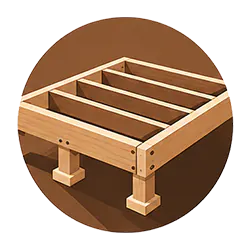
The rest comes from the structure. A ground-level rectangle over a sound frame is a very different job from a raised deck with stairs, a picture frame border and new railings. We quote the whole scope so the number you see is the number you pay.
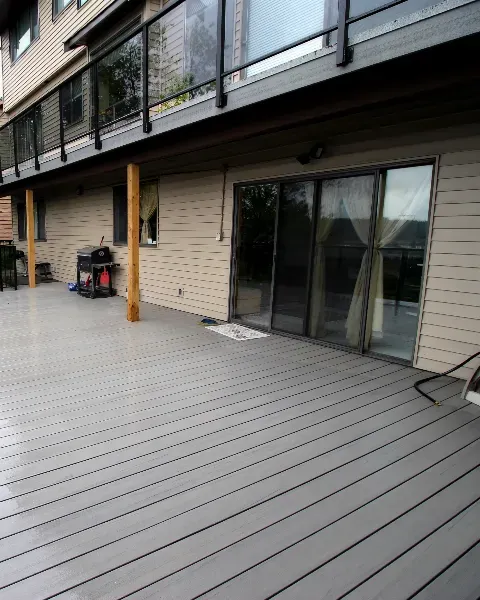
Choose composite when you want a board-and-gap deck with a natural wood look and very little upkeep. Choose vinyl when the space underneath has to stay dry, because a vinyl membrane is a continuous waterproof surface and composite is not.
That single question decides most projects. If there is a patio, storage area or living space below the deck, water passing between composite boards becomes a problem rather than a detail. Celsky installs both systems, so the recommendation follows the structure rather than the product line.
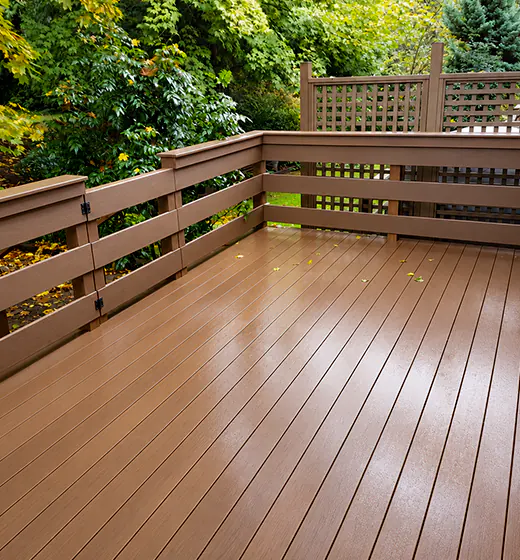






Most composite decking ideas come down to three decisions: board direction, border treatment and colour. Diagonal or herringbone layouts make a small deck feel wider but use more board and need tighter framing. A picture frame border and a contrasting inlay are the two details that most change how finished a deck looks.
Front porch composite decking is a common starting point for homeowners who want to test the material before committing to a full deck. A porch is small, highly visible from the street, and takes the worst of the wet season, which makes it a fair trial of how the boards actually perform.
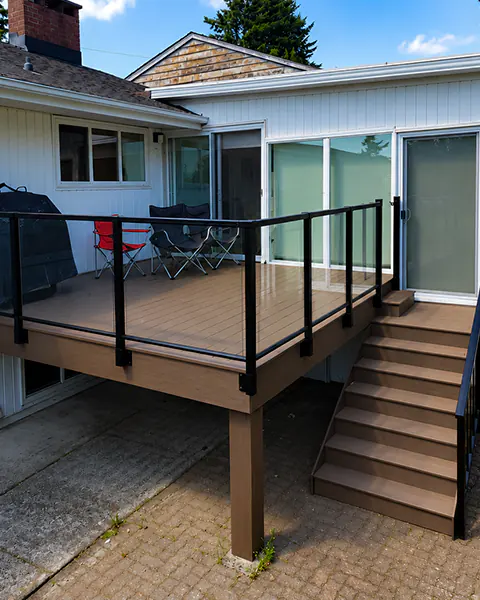
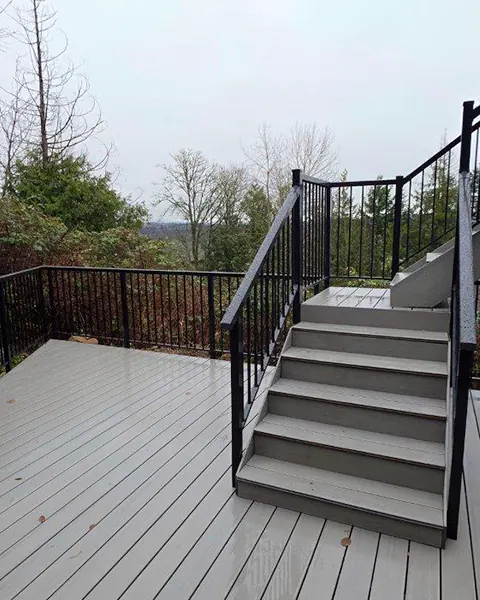
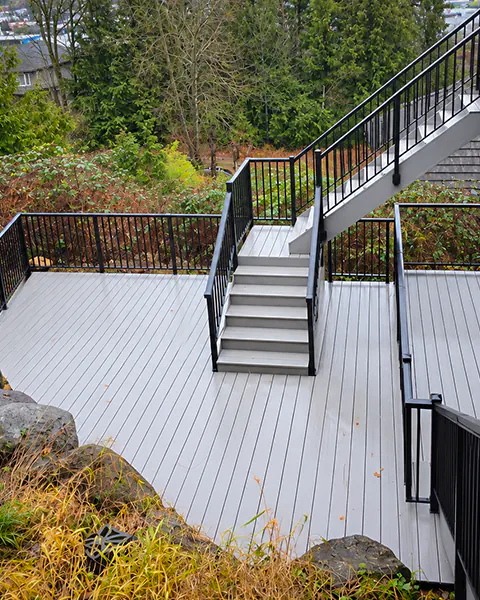
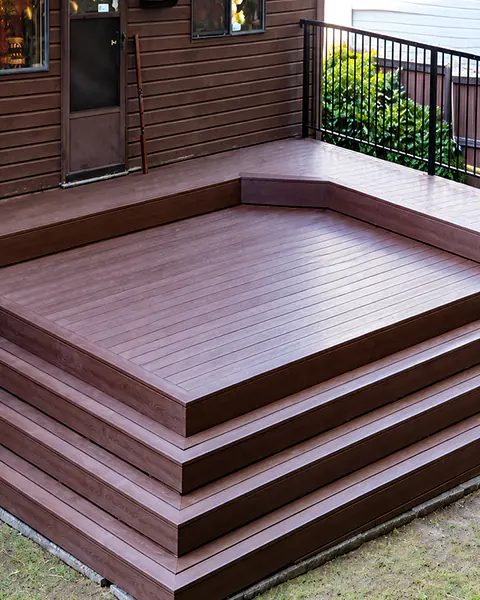
Composite decking photos are the fastest way to narrow the colour choice, but always look at a physical sample outdoors before ordering. Screens flatten the multi-tone streaking that makes a board read like real wood, and colour looks different under Lower Mainland cloud than it does under showroom light. Our gallery and before and after pages show completed work across the region.